
2026-07-08
Utility Locates Inside Buildings: A Risk Management Framework for Ground Disturbance
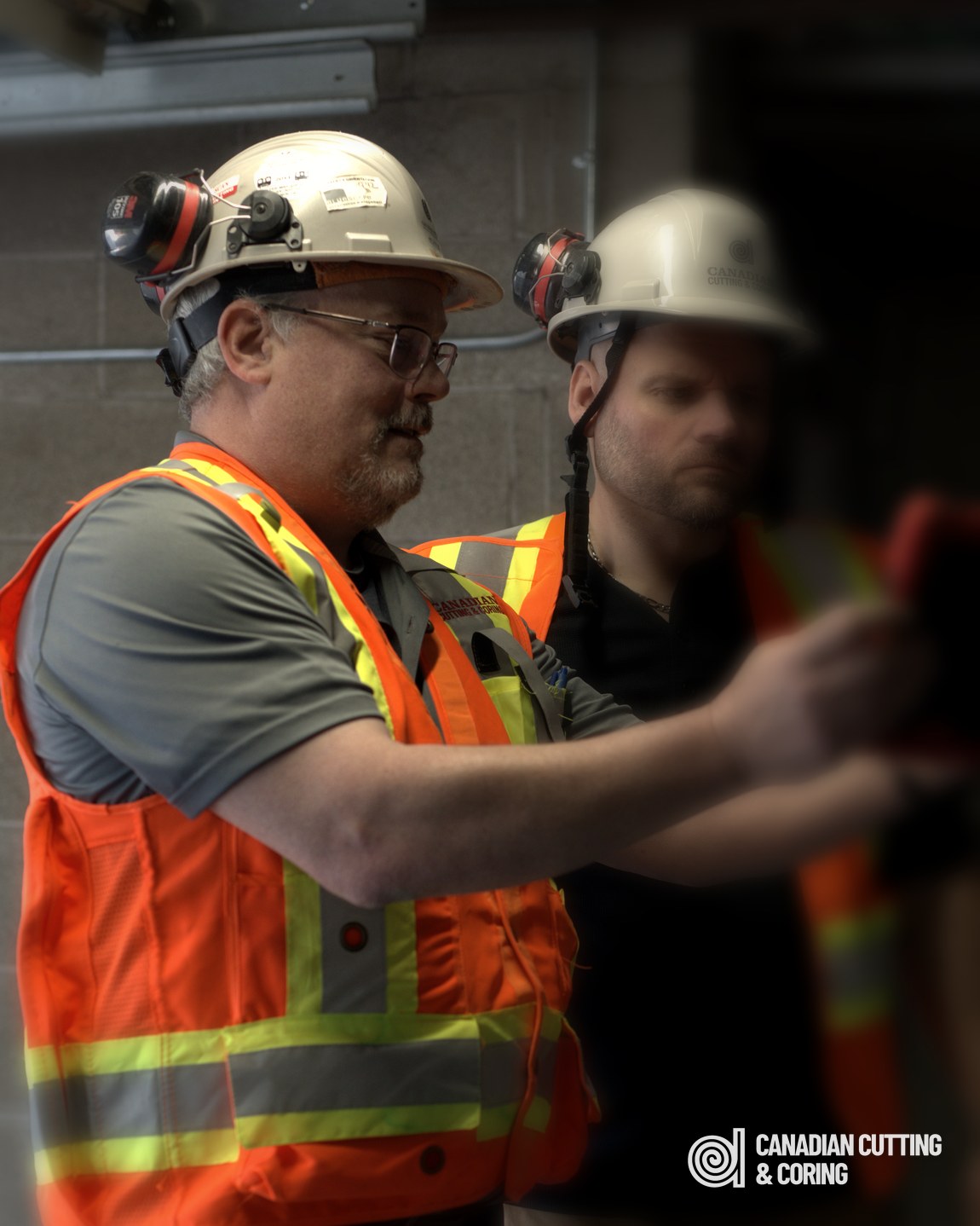
Written by
Bryan Grieve
Damage Prevention Manager, Canadian Cutting & Coring

Concrete scanning and private utility locating are often treated as the same job. They are not. When interior ground disturbance is treated as a simple "scan the floor" exercise, the gap between scanning and actual safety is where incidents happen.
The article below examines interior ground disturbance from a risk management perspective, drawing on decades of field experience in concrete scanning, coring, cutting, private locating, and damage investigations. It was co-authored by Bryan Grieve, our Damage Prevention Manager at Canadian Cutting & Coring, together with Grant Piraine, and published by the North American Private Utility Association (NAPUA). We are sharing it here in full, exactly as it was written.
Download the full article (PDF)
About NAPUA
The North American Private Utility Association (NAPUA) is an independent standards body established to provide governance for privately owned buried utility infrastructure on private property across the United States and Canada. NAPUA works to close the gap between design-phase investigation, public locate systems, and private locating before ground disturbance begins, through education, standards, and industry leadership. NAPUA is currently developing Interior Locate and Investigation Best Practices to address the very gap this article describes. Learn more at napua.org.
Utility Locates Inside Buildings: A Risk Management Framework for Ground Disturbance
By Bryan Grieve and Grant Piraine. Published by the North American Private Utility Association.
1. Introduction
Most people use the terms concrete scanning, private locating, Ground Penetrating Radar (GPR) scanning, and interior locating as though they all mean the same thing. In reality, they often refer to very different types of investigations with very different objectives.
In some cases, the objective is to identify hazards embedded within the concrete structure itself, such as post tension cables, reinforcing steel, embedded conduits, grade beams, or other structural elements that could be damaged during drilling, coring, cutting, or demolition. In other cases, the objective extends beyond the concrete and involves identifying buried utility infrastructure located beneath the slab, including electrical distribution systems, communications pathways, water services, sewer systems, and underground duct structures.
Understanding the difference between these two investigations is critical because the risks, technologies, investigative methods, and consequences are often very different. A concrete scan may successfully identify hazards within the slab while providing little or no information about buried utility infrastructure located beneath it. Conversely, a private utility locate may identify buried utility infrastructure beneath the floor while providing limited information about hazards embedded within the concrete itself.
Many incidents occur because these distinctions are not fully understood by project owners, consultants, contractors, facility operators, or even the professionals performing the investigations. Work scopes are often poorly defined, assumptions are made about what has or has not been investigated, and scanning results are sometimes interpreted as confirmation that the work area is safe when significant uncertainty may still exist.
Unlike exterior excavation, interior ground disturbance does not allow for progressive exposure and verification using vacuum excavation or hand digging. Once a slab is cut or a drill penetrates the floor, the opportunity to correct a mistake may already be gone. In large commercial, industrial, institutional, and critical facilities, the consequences of striking buried utility infrastructure can extend far beyond property damage. Electrical arc flash incidents, flooding, communications outages, operational shutdowns, structural damage, and serious worker injury are all possible outcomes.
This article explores interior ground disturbance from a risk management perspective rather than simply a scanning or locating perspective. Drawing from decades of experience involving concrete scanning, coring, cutting, private locating, and damage investigations, the authors examine the operational gaps that often exist between scanning and actual safety. More importantly, the article explores how better investigative processes, clearer scope definition, escalation procedures, and operational decision making can help reduce risk before irreversible disturbance begins.
2. Field Experience Behind This Discussion
This article was developed through the combined field experience of Bryan Grieve and Grant Piraine, two professionals who have spent decades working in different areas of damage prevention, private locating, concrete scanning, coring, cutting, and interior ground disturbance investigations.
Bryan Grieve specializes in Ground Penetrating Radar (GPR), radiography (X-Ray), concrete scanning, and the identification of structural and utility hazards embedded within concrete structures. Grant Piraine specializes in interior and exterior private locating, GPR, damage prevention, and operational risk management associated with ground disturbance on private property.
Over the years, both authors have independently and cooperatively investigated incidents involving buried electrical distribution systems, undocumented infrastructure, hidden utility pathways, and high-risk interior drilling and cutting operations. Through this work, they have observed that many industry professionals use the terms concrete scanning, private locating, and interior locating interchangeably even though these investigations often have very different objectives and risk profiles.
In several cases, projects were ultimately refused because the level of uncertainty and residual risk could not be reduced to an acceptable level without additional controls, de-energization procedures, destructive verification, or expanded investigation.
The perspectives presented in this article are based on decades of field experience involving concrete scanning, coring, cutting, private locating, interior utility investigations, and damage investigations.
3. Concrete Investigations Versus Subsurface Utility Investigations
One of the most common sources of confusion in interior ground disturbance is the assumption that concrete scanning and private utility locating are the same service. While the two investigations may overlap, they often have very different objectives, require different investigative methods, and address different risks.
In many projects, the primary objective is to identify hazards embedded within the concrete structure itself. This may include post tension cables, reinforcing steel, embedded conduits, grade beams, slab thickness changes, and other structural elements that could be damaged during drilling, coring, cutting, anchoring, or demolition activities. These investigations are typically performed using technologies such as Ground Penetrating Radar (GPR) and radiography (X-Ray) and focus primarily on the concrete structure.
In other projects, the objective extends beyond the concrete and involves identifying buried utility infrastructure located beneath the slab. This may include electrical distribution systems, communications pathways, water services, sewer systems, duct structures, and other buried utility infrastructure that could be damaged if the work extends beyond the concrete itself. These investigations often require additional investigative methods such as electromagnetic locating, sewer cameras, sondes, push rodders, records review, facility investigations, and utility system tracing.
The distinction becomes particularly important when defining the scope of work. A contractor planning to saw cut a shallow trench within a slab may only require information about what is embedded within the concrete structure. A contractor installing geotechnical boreholes, foundation piers, deep anchors, or other subsurface penetrations may require a much broader investigation that extends beyond the slab and into the soil beneath the building.
Problems often occur when these distinctions are not clearly understood or communicated. A client may request a "private locate" when they are actually seeking information about embedded structural hazards within the slab. Conversely, a client may request a concrete scan without realizing that the planned work activity could extend into buried utility infrastructure beneath the floor. In both situations, assumptions can be made about what has or has not been investigated, creating a false sense of security before the work begins. Neither investigation is inherently more important than the other. The appropriate level of investigation depends on the planned work activity, the disturbance depth, the environment, and the potential consequences if assumptions are wrong.
For this reason, one of the first questions that should be asked before any interior ground disturbance begins is not what technology will be used, but rather what the work activity will involve and how deep the disturbance will extend. The answer to that question often determines the scope of the investigation that follows.
4. Interior Ground Disturbance as a Unique Risk Environment
Interior ground disturbance is often treated as a simple scanning exercise. A contractor wants to core a hole, cut a trench, install anchors, or drill through a slab, so someone is called in to "scan the floor." In many cases, that is where the planning begins and ends. The problem is that buildings are rarely that simple.
Unlike exterior excavation, interior work takes place inside structures that may have evolved over decades through renovations, additions, tenant changes, service upgrades, and undocumented modifications. What was once an exterior service entrance may now terminate beneath an interior slab because the building was expanded years later. Electrical rooms may have been relocated, hidden behind walls, or connected through buried duct structures beneath active work areas. In many facilities, especially large commercial and industrial buildings, there may be multiple generations of buried utility infrastructure beneath the same floor.
This creates a very different risk environment than traditional exterior ground disturbance. Outside, ground disturbance professionals can often progressively expose buried utility infrastructure using vacuum excavation or hand digging to confirm what is below before continuing. Interior work usually does not allow for that same level of verification. Once a slab is saw cut, cored, jackhammered, or drilled, the disturbance is already happening. If the assumptions are wrong, there may be no opportunity to stop before damage occurs.
Another challenge is that many interior infrastructure systems are layered vertically instead of spread horizontally across open ground. A single penetration may encounter reinforcing steel, post tension cables, conduits, communications lines, water piping, drainage systems, or buried electrical distribution stacked within a relatively small area. Most often, these systems do not appear on any available drawings. Others may still be energized even though they appear abandoned or disconnected.
The consequences inside buildings can also be much greater than many people realize. Striking buried utility infrastructure is not always just a repair issue. In some environments it can create serious life safety risks for drillers, saw cutters, and occupants inside the facility. Damage to a high voltage electrical system, communications, water service, or other buried utility infrastructure within a critical care facility, high occupancy facility, industrial facility, or essential service environment can affect operations far beyond the immediate work area.
This is why interior investigations should not be approached as simply "scanning concrete." The objective is not just to identify objects within a slab but also the buried utility infrastructure beneath it. The objective is to understand the infrastructure environment well enough to reduce uncertainty before irreversible disturbance begins.
5. The Missing Layer Between Scanning and Safety
Scanning technologies such as Ground Penetrating Radar (GPR), electromagnetic locating, and radiography are extremely valuable tools, but the effectiveness of any investigation depends on whether the appropriate investigation was performed in the first place. A concrete investigation may successfully identify hazards embedded within the slab while providing little information about buried utility infrastructure beneath it. Likewise, a subsurface utility investigation may identify buried utility infrastructure while providing limited information about structural hazards embedded within the concrete. Every investigative method has limitations, and understanding those limitations is critical when planning interior work.
The challenge becomes even greater when assumptions are made about ownership, utility pathways, or how infrastructure moves through a building. In several investigations reviewed by the authors, high voltage electrical systems remained unidentified because the investigation focused on scanning the immediate work area rather than understanding the overall electrical distribution system serving the facility.
This is why interior investigations should not focus solely on what is detected beneath a single scan area. They should focus on reducing uncertainty by first understanding the nature of the planned work activity and determining what type of investigation is required. That process often includes reviewing drawings, investigating utility service entry points, identifying utility main disconnects, locating electrical and communications rooms, reviewing past renovations, and understanding how buried utility infrastructure may continue beyond the immediate work area.
In higher risk environments, scanning alone may not reduce uncertainty to an acceptable level. Additional controls may still be required, including exploratory verification, consultation with electricians or facility operators, de-energization procedures, phased cutting methods, or even refusal of the work until additional investigation can be completed safely.
The goal of interior ground disturbance risk management is not simply to locate buried utility infrastructure. The goal is to gather enough reliable information to make informed and defensible decisions before irreversible disturbance begins.
6. Tailgate SUE: Applying Investigative Thinking Before Interior Ground Disturbance
One of the biggest differences between basic concrete scanning and interior ground disturbance risk management is the investigative process that occurs before the first scan even begins. In many cases, the scan itself is only one part of the investigation.
The authors often refer to this process as a "tailgate SUE" approach. It is not formal Subsurface Utility Engineering (SUE) as defined by the American Society of Civil Engineers (ASCE) for civil engineering and design projects, but it applies many of the same investigative principles during the execution phase before drilling, coring, cutting, or demolition begins inside a building.
The process typically starts with reviewing whatever information is available for the facility. This may include drawings, renovation records, utility plans, previous locate reports, maintenance records, or conversations with facility personnel who understand how the building evolved over time. In many older facilities, no single drawing package tells the full story. Additions, retrofits, tenant changes, and undocumented modifications often create utility infrastructure conditions that no longer match the original plans.
Site reconnaissance is also an important part of the investigation. Visible indicators such as electrical rooms, communications rooms, cleanouts, transformers, meter locations, pipe chases, mechanical rooms, and service entrances can provide valuable clues about what may exist beneath the slab. In many cases, understanding where a system enters, transitions, or terminates inside the building becomes just as important as the actual scan itself.
One of the most overlooked steps in interior investigations is identifying utility main disconnects and infrastructure transition points. The authors have investigated several incidents involving buried high voltage electrical distribution systems beneath buildings where the infrastructure was incorrectly assumed to be privately owned or terminated at the exterior wall. In reality, the electrical distribution continued beneath the building to locked electrical rooms and underground duct structures before exiting the facility again to serve other areas or adjacent properties.
Building additions create another major challenge. Infrastructure that originally entered through an exterior wall decades earlier may now terminate beneath an interior slab because the building was later expanded around it. Water services, sewer systems, fibre, twisted pair communications, coaxial systems, electrical feeders, and other buried utility infrastructure may continue beneath portions of the building where no one expects them to exist. In very rare cases, gas piping may also be encountered beneath floors or within floor systems, particularly in older or heavily modified facilities. Modern codes generally prohibit gas piping from being directly buried beneath building floors unless specific protective installation methods are used, such as sleeves, ventilated chases, or accessible channels.
This is why investigative thinking similar to SUE practices is so important before interior ground disturbance begins. The goal is not simply to scan a floor and place marks on concrete. The goal is to reduce uncertainty as much as reasonably possible by understanding the infrastructure environment, the planned work activity, the limitations of the investigation, and the potential consequences if those assumptions are wrong.
7. Interior Infrastructure Continuity
One of the biggest mistakes made during interior investigations is assuming that buried utility infrastructure stops once it enters a building. In many facilities, especially older commercial and industrial properties, infrastructure beneath the floor is often part of a much larger distribution system that may continue through multiple areas of the building before terminating somewhere else entirely.
Electrical systems are one of the most common examples. A primary electrical service may enter the building, continue beneath the slab to a locked electrical room, and then leave the building again through the same duct structure to serve other portions of the facility or adjacent properties. In some cases, these systems remain utility owned even though they are routed beneath private property and occupied buildings.
Communications, water, and sewer systems can present similar challenges. Building additions, renovations, and service upgrades often result in infrastructure that follows unexpected routes beneath floors and slabs. What was once an exterior service entrance may now exist beneath an interior slab because the building was expanded around it years later.
The practical lesson is simple. The infrastructure beneath a building should not be assumed to begin or end at a wall, ownership boundary, or visible termination point. Understanding how systems continue through the facility is often just as important as identifying their location beneath the immediate work area.
8. Selecting the Appropriate Investigation
One of the most important decisions regarding interior ground disturbance is determining what type of investigation is actually required before work begins. Too often, projects move directly to scanning without first considering the nature of the work activity, the expected disturbance depth, or the potential consequences of a strike.
As discussed earlier, concrete investigations and subsurface utility investigations are not always the same. A project involving shallow saw cutting, coring, anchoring, or demolition within a slab may primarily focus on identifying structural hazards embedded within the concrete itself. Other projects, such as geotechnical drilling, environmental investigations, foundation repair, deep anchoring, or excavation beneath a slab, may require a much broader investigation focused on buried utility infrastructure beneath the concrete.
The investigative methods selected should be based on the planned work activity, the anticipated disturbance depth, the infrastructure environment, and the level of uncertainty present. In many situations, multiple investigative methods may be required to develop a reasonable understanding of the risks before disturbance begins.
Technology plays an important role in this process, but technology alone does not eliminate risk. Ground Penetrating Radar (GPR), electromagnetic locating, radiography (X-Ray), sewer cameras, sondes, push rodders, records review, facility investigations, and utility system tracing should all be viewed as tools that help reduce uncertainty rather than guarantee certainty. Each method has strengths, limitations, and situations where it may be more or less effective.
The most effective investigations are typically those that begin with understanding the planned work activity and then selecting the investigative methods necessary to address the specific risks involved. In some environments, a concrete investigation may be sufficient. In others, a much broader subsurface utility investigation may be required. As risk, uncertainty, and consequence levels increase, the investigation should expand accordingly.
Ultimately, the objective is not simply to perform a scan or apply a particular technology. The objective is to gather enough reliable information to make informed and defensible decisions before irreversible disturbance begins.
9. Practical Field Application: Beyond Scanning the Floor
One of the clearest examples of the difference between scanning concrete and managing utility infrastructure risk comes from residential foundation repair work. In these environments, contractors are often drilling or installing piers beneath residential slabs to stabilize portions of a structure affected by settlement or foundation movement.
Traditionally, many contractors only focused on identifying post tension cables and grade beams beneath the slab before drilling began. In some cases, scanning was treated as a simple step used to avoid structural components directly within the planned pier locations. However, this approach often failed to account for other buried utility infrastructure beneath the floor, particularly water and sewer systems that could directly conflict with the planned work activity.
During one project, one of the authors was hired by a new client after another locating contractor was unavailable. While reviewing the proposed pier locations and scanning with GPR to identify post tension cables and grade beams, the engineer began laying out the pier locations. The locator then asked the engineer how the pier locations could be finalized without first identifying the buried water and sewer systems beneath the slab. The engineer explained that the previous locating company never investigated them and that the crew would simply readjust the pier locations during excavation if conflicts were encountered. Once the water and sewer systems were investigated, three pier locations had to be moved. Had the conflicts only been discovered after excavation began, additional concrete removal, delays, and project costs would likely have occurred.
The investigation expanded beyond simply scanning the concrete. A sewer camera equipped with a sonde was inserted through the building cleanout outside the home while fixtures inside the building were turned on or flushed to help identify how the sewer system was routed beneath the floor. By observing fixture locations, pipe chases, cleanouts, and the camera path itself, the investigation helped identify potential conflicts between the planned pier locations and the buried sewer infrastructure. In some cases, water services beneath the slab could also be traced using electromagnetic locating when copper piping was present. In other situations, the water service transitioned from copper outside the building to non-metallic piping beneath the slab, limiting the effectiveness of electromagnetic locating methods.
The contractor initially questioned why the sewer and water systems were even being investigated because previous locate providers had only scanned for post tension systems and structural hazards. However, after discussing how often pier locations later had to be relocated due to unexpected sewer or water conflicts beneath the slab, the value of the additional investigation became clear. The contractor also acknowledged that accidental waterline strikes had previously caused water damage to the interior of the home during digging operations.
Where the water service could not be confidently located beneath the slab, additional mitigation measures were discussed before drilling proceeded. This included recommending that the water service be shut off at the street before disturbance began in order to reduce the potential consequences of an accidental strike during drilling operations.
This example highlights an important point. The best interior investigations are not simply focused on identifying detectable objects beneath the slab. They are focused on understanding the planned work activity and identifying what utility infrastructure may create risk, delays, damage, or unsafe conditions during the work itself.
The objective is not to eliminate all uncertainty, which is often impossible in complex interior environments. The objective is to reduce uncertainty as much as reasonably possible before irreversible disturbance begins.
10. Escalation of Controls Based on Risk and Uncertainty
One of the most important concepts in interior ground disturbance risk management is understanding that the level of investigation and operational control should increase as uncertainty and consequence increase. Not every project requires the same level of effort. A small residential drilling location inside a lightly reinforced slab presents a very different level of risk than coring through a heavily congested floor inside a critical care facility, industrial facility, or high occupancy environment.
One of the biggest mistakes made on interior projects is treating all scans as equal regardless of the environment, the buried utility infrastructure present, or the potential consequences of a strike. In many cases, the initial investigation may identify concerns or limitations that require additional investigative effort before work proceeds safely.
This escalation process may involve tighter scan spacing, scanning from multiple directions, higher frequency antennas, sewer cameras, push rodders, radiography, exploratory openings, or consultation with additional specialists familiar with the infrastructure systems within the building. Depending on the environment, electricians, plumbers, communications specialists, engineers, facility operators, maintenance personnel, or utility representatives may all need to become part of the investigation and planning process.
In some situations, the safest option may involve operational controls rather than additional locating alone. This can include de-energization procedures, lockout/tagout processes, shutting down water systems, phased cutting methods, limited depth cutting, exploratory demolition, or restricting work until additional information becomes available.
The objective is not simply to continue escalating technology indefinitely. The objective is to reduce uncertainty to a level where the planned work activity can proceed with a reasonable and defensible level of risk management based on the environment and the consequences involved.
There are also situations where the level of uncertainty remains too high even after multiple investigative efforts have been completed. In these cases, experienced professionals may determine that proceeding with the work is not defensible without additional controls, redesign, destructive verification, or temporary shutdowns of critical systems. Refusing unsafe work is sometimes the most responsible decision that can be made.
One of the challenges within the industry is that economic pressures often push projects toward speed and production rather than investigative due diligence. Owners, consultants, contractors, and facility operators may all feel pressure to keep projects moving. However, utility infrastructure does not become less dangerous simply because schedules are compressed or budgets are limited. In many cases, the cost of additional investigation is insignificant compared to the potential consequences of a serious strike involving electrical distribution, communications systems, water services, or structural elements within a concrete slab.
11. False Risk Transfer in Interior Ground Disturbance
One of the most common problems in interior ground disturbance projects is the transfer of risk from one party to another without fully understanding or addressing the underlying uncertainty involved. In many cases, owners, consultants, contractors, and facility operators assume that once a floor has been scanned, the risk has been eliminated and the responsibility has shifted to the locator, scanner, cutter, or driller performing the work.
In reality, no investigative technology can guarantee that every utility hazard has been identified beneath a slab or within a structure. Every investigation has limitations related to access, congestion, depth, interference, building modifications, undocumented infrastructure, and interpretation. Problems begin when those limitations are ignored or misunderstood and the scan itself becomes treated as a guarantee of safety rather than one part of a larger risk management process.
This issue becomes especially serious in high consequence environments where pressure often exists to keep projects moving quickly while minimizing shutdowns, de-energization procedures, operational interruptions, or additional investigation costs. In some cases, contractors or facility owners may resist additional investigative work because they believe the initial scan should already provide all the answers needed to proceed safely.
The authors have both encountered projects where the level of uncertainty remained too high to proceed safely without additional controls or investigation. In several cases, work was ultimately refused because critical infrastructure systems could not be confidently identified, de-energization was resisted, or the potential consequences of a strike were considered unacceptable.
One of the most overlooked aspects of this issue is that the people carrying the greatest life safety exposure are often not fully involved in the decision making process. Drillers, cutters, and field crews may arrive on site expecting that all necessary investigation and planning has already been completed, even though important limitations, uncertainties, or unresolved concerns may still exist beneath the slab.
Proper due diligence in interior ground disturbance is not about eliminating all risk. In many environments, that is impossible. The objective is to identify limitations honestly, apply reasonable investigative effort based on the level of risk involved, implement additional controls where necessary, and make defensible operational decisions before irreversible disturbance begins.
12. Case Studies
The following case studies are based on actual projects and investigations involving interior drilling, cutting, and utility infrastructure conflicts beneath buildings. Specific project names, locations, and parties have been intentionally omitted. The objective is not to assign blame, but to demonstrate how hidden infrastructure, incomplete assumptions, and unresolved uncertainty can create serious operational and life safety risks during interior ground disturbance.
These examples also demonstrate an important point discussed throughout this article. In many situations, the infrastructure itself was not completely invisible or impossible to identify. The larger issue was often the failure to fully investigate the overall infrastructure environment, understand how the building systems functioned, or recognize the limitations of the initial investigation before disturbance began.
12.1. High Occupancy Facility with Complex Electrical Systems
One investigation involved a large downtown convention facility exceeding 700,000 square feet that contained multiple electrical distribution rooms, underground duct structures, hundreds of electrical floor receptacles, and buried electrical systems routed beneath large portions of the building. Over time, the facility had undergone multiple additions, renovations, and infrastructure modifications, creating a complex electrical environment beneath the floor slab.
Several years before the events described below, an interior coring project was performed within a kitchen area of the facility. The scope at the time focused primarily on scanning the concrete prior to drilling. Facility personnel arranged for an electrician to de-energize the power in the kitchen and the concrete slab was scanned before drilling proceeded.
The investigation was largely focused on hazards within the concrete itself. However, a buried primary electrical cable servicing the main electrical panel for the kitchen was located approximately three feet beneath the floor and was not anticipated by the electrician or the project team. During drilling operations, the cable was struck, resulting in a significant electrical arc flash event. Fortunately, no injuries occurred, but the incident highlighted that scanning the concrete alone did not address the deeper electrical infrastructure environment beneath the slab.
Several years later, the same convention facility initiated another project involving numerous interior boreholes throughout the building. Having knowledge of the earlier electrical strike, the private locate team immediately raised concerns regarding the complexity of the buried electrical distribution system beneath the facility.
Initial discussions focused primarily on "scanning the boreholes." However, concerns quickly developed regarding the overall electrical distribution system beneath the building. Multiple electrical rooms existed throughout the facility, and no reliable records were available identifying the buried electrical systems or their routing beneath the slab.
A major concern identified during the planning process was that many of the buried electrical systems were not embedded within the concrete itself. Based on previous investigations at the facility, the locate team knew that portions of the electrical distribution system were installed within deeper bedding materials and underground duct structures where high-frequency Ground Penetrating Radar (GPR) may not reliably detect them. A more comprehensive investigation would likely have required extensive electromagnetic locating, coordination with facility electricians, and large-scale tracing of the electrical distribution network throughout the building.
As discussions progressed, it became apparent that the level of uncertainty remained extremely high. The engineering consultant had budgeted the investigation as a relatively simple scanning project that could be completed quickly and had secured the work based largely on a fixed-price proposal. The available budget allowed for approximately one day of locating services for the entire facility.
The private locate team reached a different conclusion. Based on the size, complexity, and history of the facility, the team estimated that the work could require one to two weeks of investigation to reasonably identify the buried electrical infrastructure and reduce uncertainty to a more defensible level.
The investigation also revealed a significant disconnect between the project's operational expectations and the level of investigation required. Facility representatives reportedly required that drilling activities not disrupt facility operations. At the same time, the project scope and budget did not allow for the level of electrical system tracing and verification that the investigative team believed was necessary to reasonably manage the risk.
Meetings were subsequently held with both the engineering consultant and facility representatives to discuss the concerns involving the buried electrical infrastructure, residual uncertainty, and limitations of the proposed investigation scope. The investigative team believed the work could likely have been completed more safely through a significantly expanded investigation involving extensive electromagnetic locating, coordination with facility electricians, and enhanced operational controls. However, the level of effort required extended well beyond the original scope and budget established for the project.
Ultimately, the work was refused because the private locate team determined that the risk could not be reduced to a defensible level without additional infrastructure verification and operational controls. The project later proceeded using another locate provider willing to perform a more limited scope of investigation focused primarily on scanning the individual borehole locations.
Together, these two projects demonstrated the distinction between scanning concrete and investigating the buried utility infrastructure environment beneath it. They also highlighted how commercial pressures, fixed-price bidding environments, and operational constraints can sometimes create situations where the expected level of due diligence becomes incompatible with the actual complexity and risk present beneath a facility.
12.2. Industrial Facility with Main Electrical Feed Under the Building Floor
Another investigation involved interior drilling operations inside an industrial facility where a buried 16,000 volt primary electrical cable was struck approximately 4 feet beneath the concrete floor slab within an underground duct structure. The drilling was part of an environmental investigation involving interior boreholes inside the building.
Prior to drilling, both public and private locates had been completed. The public locate provider indicated that the interior work area was "clear" and that they do not locate inside buildings as it is private and directed the contractor to obtain a private locate for the area. A private locate company was then retained to investigate the interior drill locations.
The private locate investigation primarily involved Ground Penetrating Radar (GPR), passive electromagnetic scanning, and inductive sweeps around the borehole locations. Multiple magnetic fields were identified and marked around the drilling area; however, the investigation did not determine what the signals represented or where the electrical systems originated and terminated within the building.
The drilling proceeded and the buried primary electrical cable was struck approximately 4 feet beneath the slab. Following the incident, the investigation determined that the buried primary electrical cable entered the building and proceeded to a locked electrical room within the building and then continued back out through the same underground duct structure before exiting the building again where it had originally entered to feed other buildings within the subdivision.
The investigation highlighted several major issues that still exist within some interior investigations today. The public locate indicated that the area was clear of utility owned electrical infrastructure even though the utility owned primary electrical cable remained beneath the building floor before the customer owned demarcation point. At the same time, the private locate investigation identified multiple unknown magnetic fields near the drilling location but did not fully investigate the signals or follow them back to their source and termination points within the facility.
The investigation also demonstrated the limitations of relying on scanning isolated drill locations alone when dealing with deeper electrical infrastructure routed beneath buildings. While GPR and passive electromagnetic scans may identify signs of buried infrastructure, they do not necessarily identify what the buried systems are, who owns them, where they originate, or where they continue beyond the immediate work area.
Another important issue identified during the investigation involved the overall understanding of the building electrical distribution system itself. The investigation determined that insufficient attention had been given to identifying the utility main service, the electrical room configuration, the demarcation point, and the continuity of the primary electrical infrastructure beneath the facility before drilling began.
The incident reinforced the importance of investigating utility main services, switch rooms, electrical distribution pathways, and unknown electromagnetic signals before interior drilling operations proceed. It also highlighted how assumptions regarding ownership boundaries and the limits of public versus private locating responsibilities can create significant risk inside buildings where public utility infrastructure may continue beneath interior slabs beyond what many contractors or locate technicians expect.
12.3. Public Utility Infrastructure Beneath Buildings
Another investigation involved interior drilling operations inside a commercial building where a buried 27,600 volt primary electrical cable owned by the local power utility was struck beneath the concrete floor during geotechnical drilling operations. Prior to drilling, both public and private locates had been obtained for the work area.
The public locate provider marked the exterior electric power service to the building but did not include the interior of the building within the limits of the locate. The locate documentation indicated that the interior area was not part of their scope of work and did not identify that the primary electrical cable continued beneath the building floor.
A private locate company was retained to investigate the interior drill locations. The private locate investigation involved scanning the borehole locations for active and passive electromagnetic signals and identifying privately owned electrical infrastructure within the work area. However, the buried utility owned primary electrical cable beneath the building floor was not identified before drilling began.
Following the incident, the investigation determined that the buried primary electrical cable entered the building and continued beneath the floor through an underground duct structure before entering a locked electric utility company room at the back of the building. The cable was owned by the electric utility company even though it was located beneath the building floor.
The investigation highlighted a major operational gap that still exists in many interior investigations today. Public utility locate providers often do not locate utility owned infrastructure inside buildings, while private locate companies generally focus on privately owned infrastructure beyond the utility demarcation point. This can create situations where buried utility owned infrastructure beneath buildings is incorrectly assumed to terminate at the exterior wall, transition to private ownership, or no longer exist within the interior work area.
The investigation also reinforced the importance of identifying utility demarcation points, utility main services, switch rooms, and infrastructure continuity before interior drilling begins. Had the overall electrical distribution system and ownership boundaries been more thoroughly investigated, the buried utility owned primary electrical cable may have been identified before drilling operations proceeded.
This incident also demonstrated that locating isolated drill locations alone may not be sufficient in complex interior environments where buried utility infrastructure extends beneath buildings beyond what is visible from exterior locates or surface level investigations.
13. Conclusion
Interior ground disturbance is often treated as a simple scanning exercise. In reality, it is one of the most complex and least understood areas of buried utility infrastructure risk management. Unlike exterior investigations, there is often little or no reliable mapping available, ownership boundaries can become unclear, and buried utility infrastructure may continue beneath buildings in ways that are not immediately obvious from surface observations or public locate reports.
Throughout this article, the authors have highlighted examples where assumptions about ownership, utility routing, technology capabilities, investigation scope, and locate responsibilities created significant risk. In some cases, projects proceeded without a complete understanding of the infrastructure environment. In others, the level of uncertainty was recognized early enough that additional controls could be implemented or the work could be refused altogether.
The common theme in each example is that selecting the appropriate investigation is often more important than selecting a particular technology. A concrete investigation and a subsurface utility investigation may involve different objectives, different risks, and different investigative methods. While technologies such as Ground Penetrating Radar, electromagnetic locating, radiography, sewer cameras, and other investigative tools can provide valuable information, none of them replace the need for critical thinking, proper planning, and a structured investigation process.
The authors believe that interior investigations should be approached using the same investigative mindset that has long existed within Subsurface Utility Engineering. Effective investigations combine records review, facility knowledge, field observations, available technology, and professional judgment to reduce uncertainty and develop the most complete understanding possible before disturbance begins.
As interior drilling, coring, cutting, demolition, and rehabilitation activities continue to increase across North America, the need for consistent guidance becomes increasingly important. Existing damage prevention practices, standards, and locate programs provide valuable direction for exterior ground disturbance activities, but very little guidance exists for interior investigations beneath buildings.
The North American Private Utility Association (NAPUA) is currently developing Interior Locate and Investigation Best Practices and companion guidelines to help address this gap. The objective is not to replace existing standards or technologies, but to provide a practical risk management framework that helps owners, consultants, contractors, private locators, concrete scanning professionals, and other stakeholders better understand and manage the unique challenges associated with interior ground disturbance.
When uncertainty exists beneath a floor slab, the goal should never be to simply scan and hope for the best. The goal should be to understand the work activity, perform the appropriate investigation, and reduce uncertainty enough to make informed and defensible decisions before disturbance begins.
Download the full article as a PDF · Learn more about NAPUA and its work at napua.org.
About the author
Bryan Grieve
Damage Prevention Manager, Canadian Cutting & Coring
Bryan Grieve is the Damage Prevention Manager at Canadian Cutting & Coring. He specializes in Ground Penetrating Radar, radiography, and the identification of structural and utility hazards embedded in concrete. He co-authored this framework with Grant Piraine for the North American Private Utility Association.