
Private Utility Locating & Damage Prevention
Filling the Gaps. Reducing Risk.
Supporting Safer Ground Disturbance.
Not all buried utilities are identified through public utility locate programs. Privately owned services, undocumented infrastructure, and discrepancies in available records can create significant risks during excavation and other ground disturbance activities.
Canadian Cutting & Coring provides Private Utility Locating and Damage Prevention services to help identify potential conflicts, reduce uncertainty, and support informed decisions before work begins.
or call 1-800-665-0705
Serving Ontario since 1964 · ORCGA Damage Prevention Technicians
Why it matters
Why Private Utility Locating Matters
Public utility locates are an essential first step, but they may not identify privately owned infrastructure beyond utility ownership or demarcation points. Private locating helps fill these gaps by investigating buried electrical, gas, water, sewer, communication, drainage, and other services within the defined survey area.
Public and private locating work together as part of a broader damage prevention strategy.
Methods
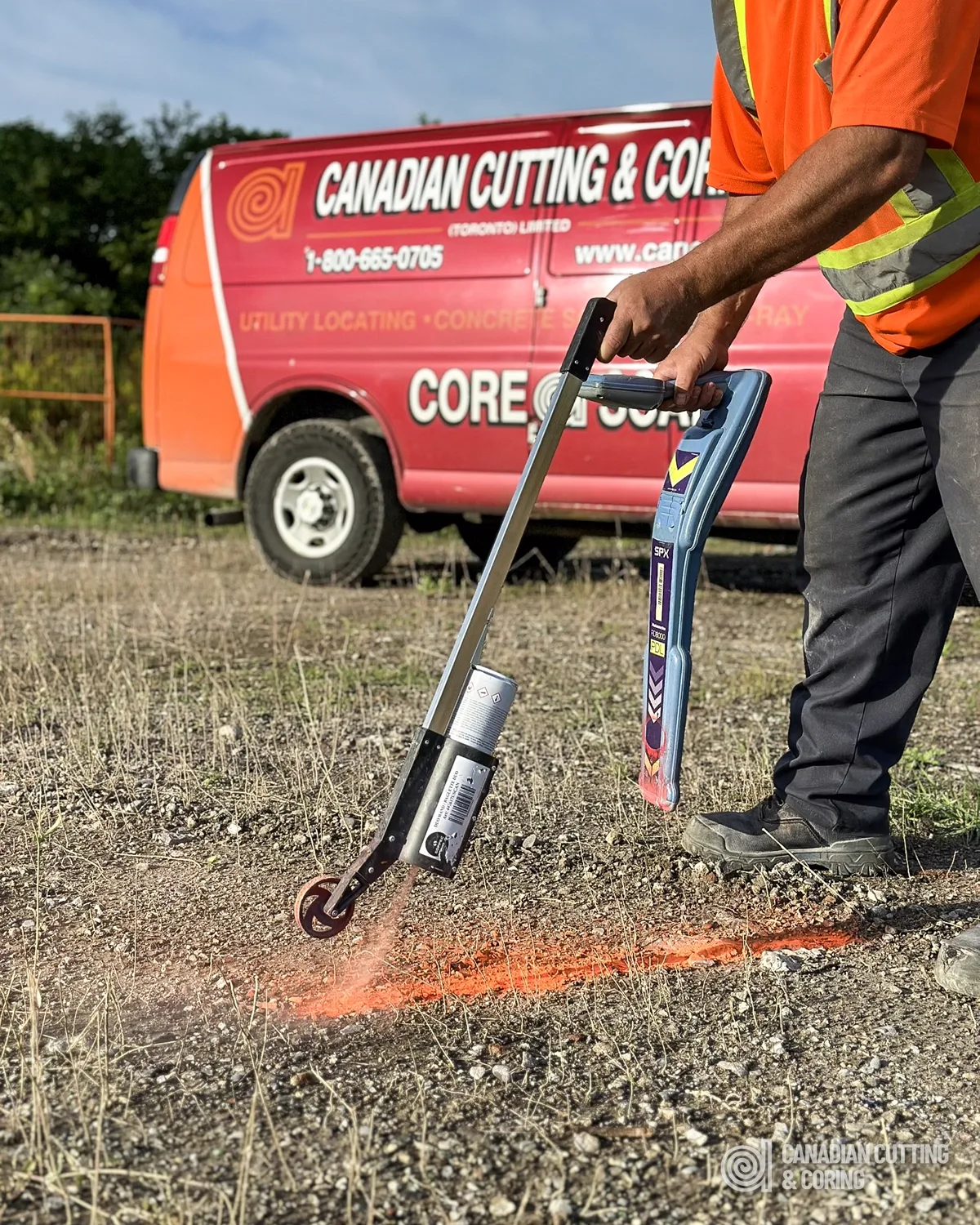
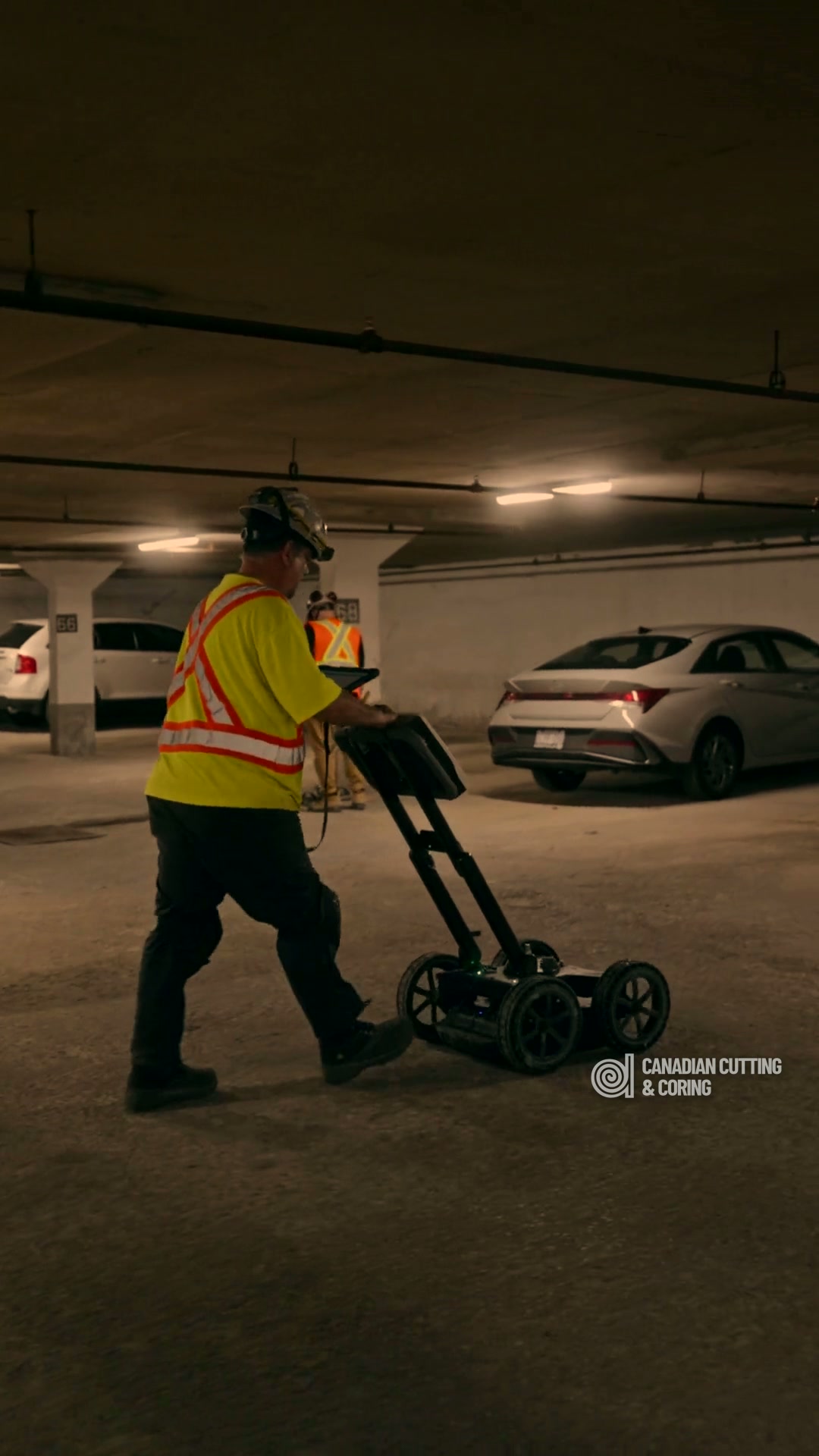
Our Locating Technologies
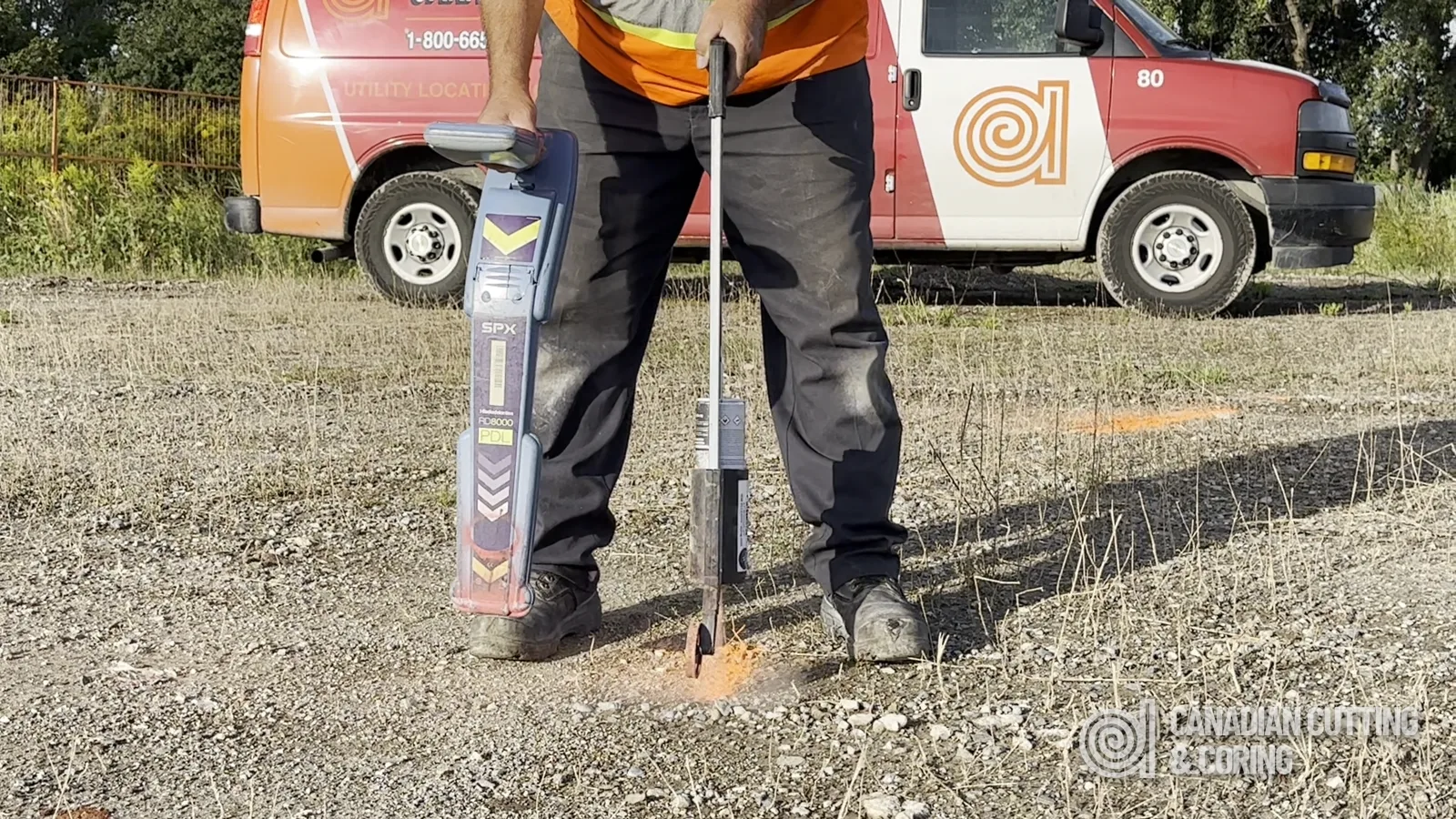
Electromagnetic (EM) Locating
Tracing detectable conductive pipes, cables, and utilities.
Ground Penetrating Radar (GPR)
Investigating buried infrastructure and subsurface anomalies where conditions permit.
Drain & Sewer Locating
Tracing accessible drainage systems using appropriate locating equipment.
Records Review & Site Assessment
Comparing available information with observable site conditions.
No single technology can identify every buried utility. Our technicians select complementary methods based on the site and the investigation objectives.
Qualifications
Specialized Training & Damage Prevention Expertise
Our technicians combine practical field experience with specialized training in GPR, electromagnetic utility locating, and damage prevention best practices. Most of our experienced technicians who meet program eligibility requirements hold the Ontario Regional Common Ground Alliance (ORCGA) Damage Prevention Technician (DPT) designation.
We go beyond locating and marking utilities, recognizing potential conflicts, technical limitations, and uncertainties that may affect ground disturbance.
Before we arrive
Preparing for Your Private Utility Locate
Effective damage prevention starts before the survey. Clients can help reduce uncertainty by completing these pre-survey steps:
Better information and access support a more effective investigation and help reduce uncertainty before ground disturbance begins.
- 01
Define the Ground Disturbance
Provide the excavation type, location, proposed depth, and limits of work.
- 02
Complete Public Utility Locates
Arrange applicable public utility locates and clearances, and provide the results for review before the private survey.
- 03
Provide Utility Access
Ensure access to relevant infrastructure and appurtenances, including buildings, utility rooms, and service connections.
- 04
Share Available Records
Provide utility drawings, as-builts, previous locate records, and other relevant documentation.
- 05
Share Site Knowledge
Make knowledgeable personnel available to discuss known utilities, previous construction, repairs, and undocumented installations.
How it works
Our Five-Step Damage Prevention Process
From defining the scope to communicating limitations, every private locate follows the same sequence so findings are documented and uncertainties are made clear.
Define the Scope
Review the proposed ground disturbance area, available drawings, and project requirements.
Our Damage Prevention Approach
Identify. Assess. Communicate.
Our approach is informed by industry damage prevention principles, including those promoted by the North American Private Utility Association (NAPUA) and ORCGA. We investigate known and suspected infrastructure, assess conditions affecting detection, and communicate findings and limitations. Where uncertainty remains, additional investigation or verification may be recommended.
Questions
Frequently Asked Questions
Why do I need a private locate if I already have public locates?+
Public locates may not identify privately owned, undocumented, or abandoned infrastructure. Private locating helps address these gaps and reduce uncertainty before ground disturbance.
What types of private utilities can be located?+
Electrical, gas, water, sewer, drainage, communications, irrigation, and other detectable buried infrastructure, subject to site conditions and locating limitations.
Are public utility locates still required?+
Yes. Private utility locating complements but does not replace applicable public utility locate requirements. The client or ground disturbance contractor is responsible for arranging public locates and providing completed documentation for review before the private survey.
Can you locate plastic or non-metallic pipes?+
In some cases. Non-metallic utilities may be detected using GPR, tracer wires, sondes, or other suitable methods. Detectability depends on pipe characteristics, accessibility, and surrounding conditions.
How accurate are utility markings and depth estimates?+
Locate markings and depth estimates are interpretations based on available information and field measurements. Accuracy varies with utility configuration, interference, ground conditions, and the technologies used. Verification may be necessary before excavation.
Can every buried utility be detected?+
No. Utility detection depends on material composition, depth, configuration, accessibility, ground conditions, interference, and technical limitations. The absence of a detectable response does not confirm the absence of buried utilities.
What if a utility location remains uncertain?+
We document and communicate unresolved conditions and recommend additional investigation or verification, where appropriate. This may include controlled exposure to confirm utility locations before ground disturbance.
How long are utility locate markings valid?+
Public locate validity is governed by applicable requirements and the documentation issued by utility owners. Private locate markings should be reassessed if site conditions change, markings become unclear, or work is delayed.
Private utility locating across the GTA and Ontario
Ready to Reduce Ground Disturbance Risk?
Whether planning excavation, trenching, drilling, or other ground disturbance, our team can help identify potential utility conflicts and reduce uncertainty before work begins.
Request a Private Locate Quoteor call 1-800-665-0705
Important: Private locating does not guarantee identification of all buried infrastructure or certify an area as free of utilities. Findings reflect accessible conditions and information available at the time of investigation. Public locate obligations and safe ground disturbance practices remain applicable.