
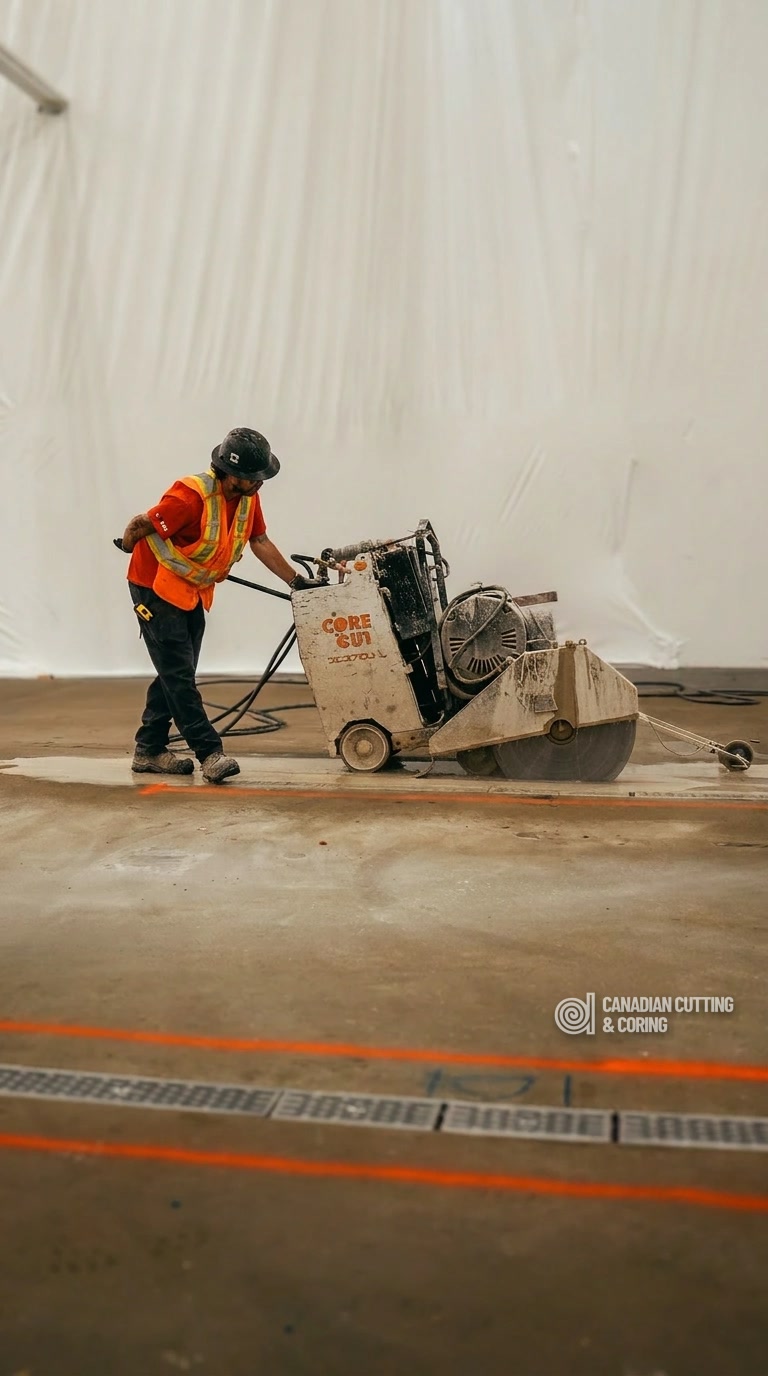
Electric Slab Sawing · Ontario
Electric Slab Sawing for Concrete Floors, Utility Trenches, and Structural Openings
Large-capacity electric slab saws for utility trenching, floor openings, slab removals, and structural modifications in reinforced concrete. Supported by experienced crews and modern equipment, we provide electric slab sawing services for commercial, industrial, institutional, and infrastructure projects across Ontario.
Serving Ontario since 1964 · Modern equipment · Experienced crews · Proven methods
The basics
What Is Electric Slab Sawing?
Electric slab sawing, also known as flat sawing, is the process of…
Capabilities
Built for Serious Concrete Cutting
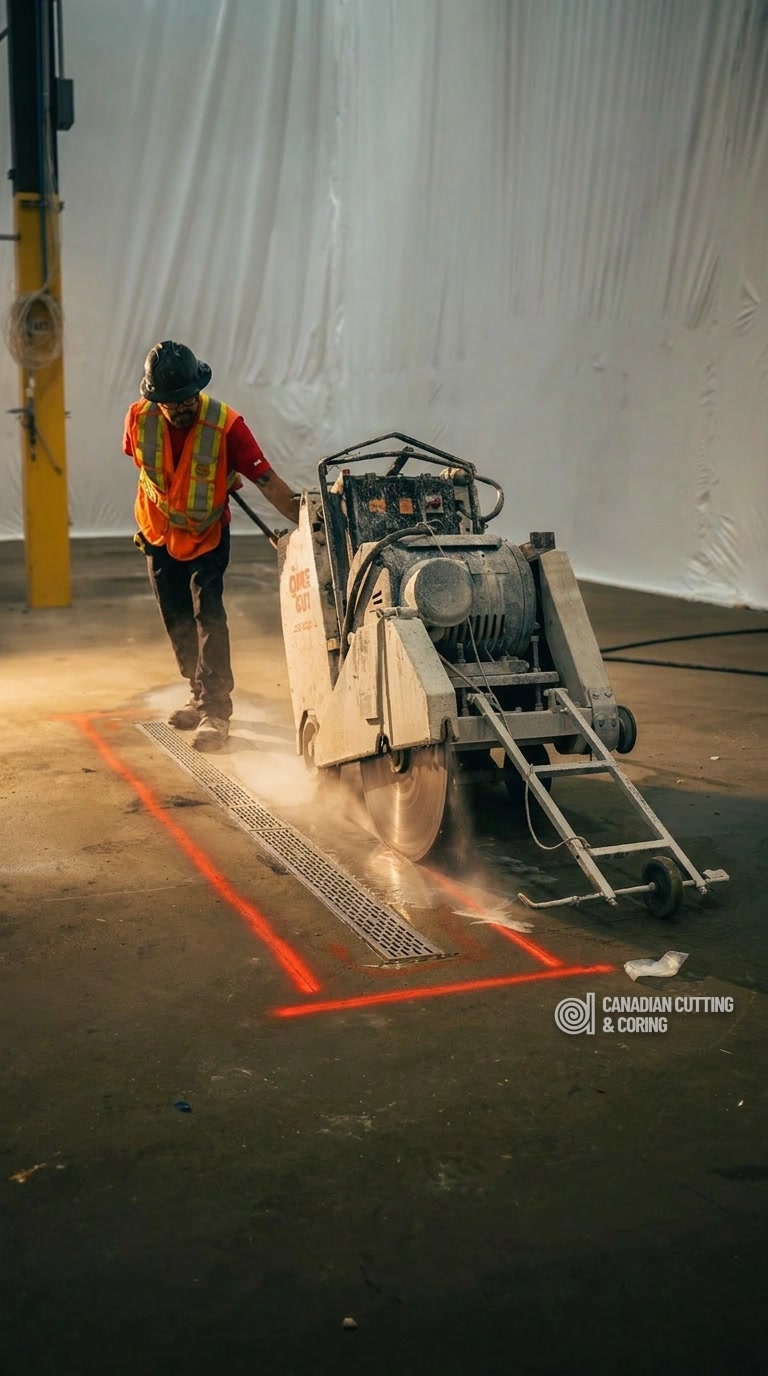
Large-capacity electric slab saws capable of cutting reinforced concrete up to 17.25″ deep. Supported by experienced crews, project planning, concrete imaging, and removal coordination.
17.25″
Maximum Cutting Depth
Large-capacity electric slab saws capable of cutting reinforced concrete up to 17.25″ deep for trenching, slab removals, and structural modifications.
42″
Blade Capacity
42″ diamond blades designed for demanding concrete cutting applications where depth, accuracy, and production matter.
Reinforced Concrete Expertise
Experience cutting commercial, industrial, institutional, and infrastructure concrete structures, including heavily reinforced slabs and structural sections.
Utility Trenching
Concrete trenching for mechanical, electrical, plumbing, drainage, and process piping installations.
Structural Openings
Controlled concrete cutting for elevator shafts, stair openings, equipment pits, access openings, and floor modifications.
Full Project Support
Supported by concrete imaging, coring, removal coordination, and experienced crews to help keep projects moving.
Applications
Where Electric Slab Sawing Is Commonly Used
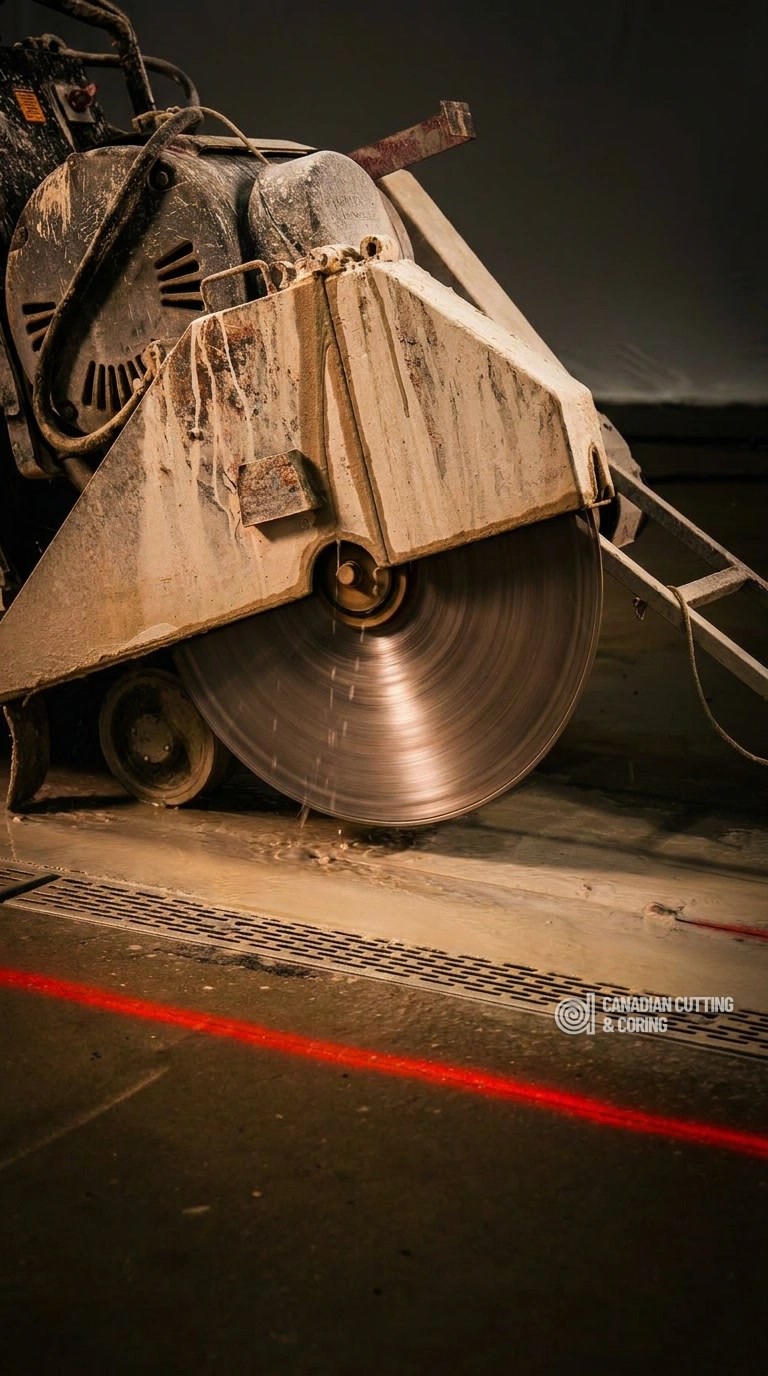
Electric slab sawing is a versatile concrete cutting method used for everything from utility installations and plumbing upgrades to structural modifications and slab removals. The applications below represent some of the most common projects our crews are called upon to support across commercial, industrial, institutional, and infrastructure sectors throughout Ontario.
Utility Trenching
Concrete trenching for mechanical, electrical, plumbing, drainage, and process piping installations beneath existing concrete floors.
Drainage & Plumbing Modifications
Floor drains, trench drains, sanitary upgrades, drain relocations, and plumbing infrastructure changes within existing facilities.
Commercial Kitchen Renovations
Concrete cutting and removals for grease traps, trench drains, floor drains, and underground service modifications in restaurants and food-service facilities.
Structural Openings
Controlled concrete cutting for elevator shafts, stair openings, access hatches, equipment pits, and floor modifications.
Slab Removals
Sectioning and removal of reinforced concrete floors for renovations, building upgrades, equipment installations, and redevelopment projects.
Interior Renovation Projects
Concrete cutting within office towers, hospitals, schools, transit facilities, data centres, and other occupied buildings where electric equipment is often preferred.
Ready when you are
Planning a Concrete Cutting Project?
Send us the drawings or project details. Our team will help confirm the scope, method, and timeline before the work begins.
Equipment choice
Choosing Between Electric and Diesel Slab Sawing
Both electric and diesel slab saws play an important role in concrete cutting. The appropriate equipment depends on project requirements, including access, ventilation, power availability, slab thickness, production demands, and overall site conditions. Understanding where each method is most commonly used helps ensure the right equipment is selected for the work.
Electric Slab Sawing
- Interior construction and renovation projects
- Occupied buildings and active facilities
- Hospitals, schools, office towers, and transit facilities
- Areas where engine exhaust cannot be accommodated
- Locations with adequate electrical service available
- Controlled cutting in enclosed environments
Diesel Slab Sawing
- Roadways, pavement, and exterior concrete
- Large open-air construction sites
- Remote locations without electrical service
- High-production cutting applications
- Projects requiring greater mobility
- Large-scale exterior cutting operations
The most effective cutting solution depends on the project, not the equipment. Access, ventilation, power availability, slab thickness, reinforcement, production requirements, and site conditions all influence equipment selection. Our team regularly evaluates these factors to determine the most practical and efficient approach for each project.
Project execution
Before Concrete Cutting Begins
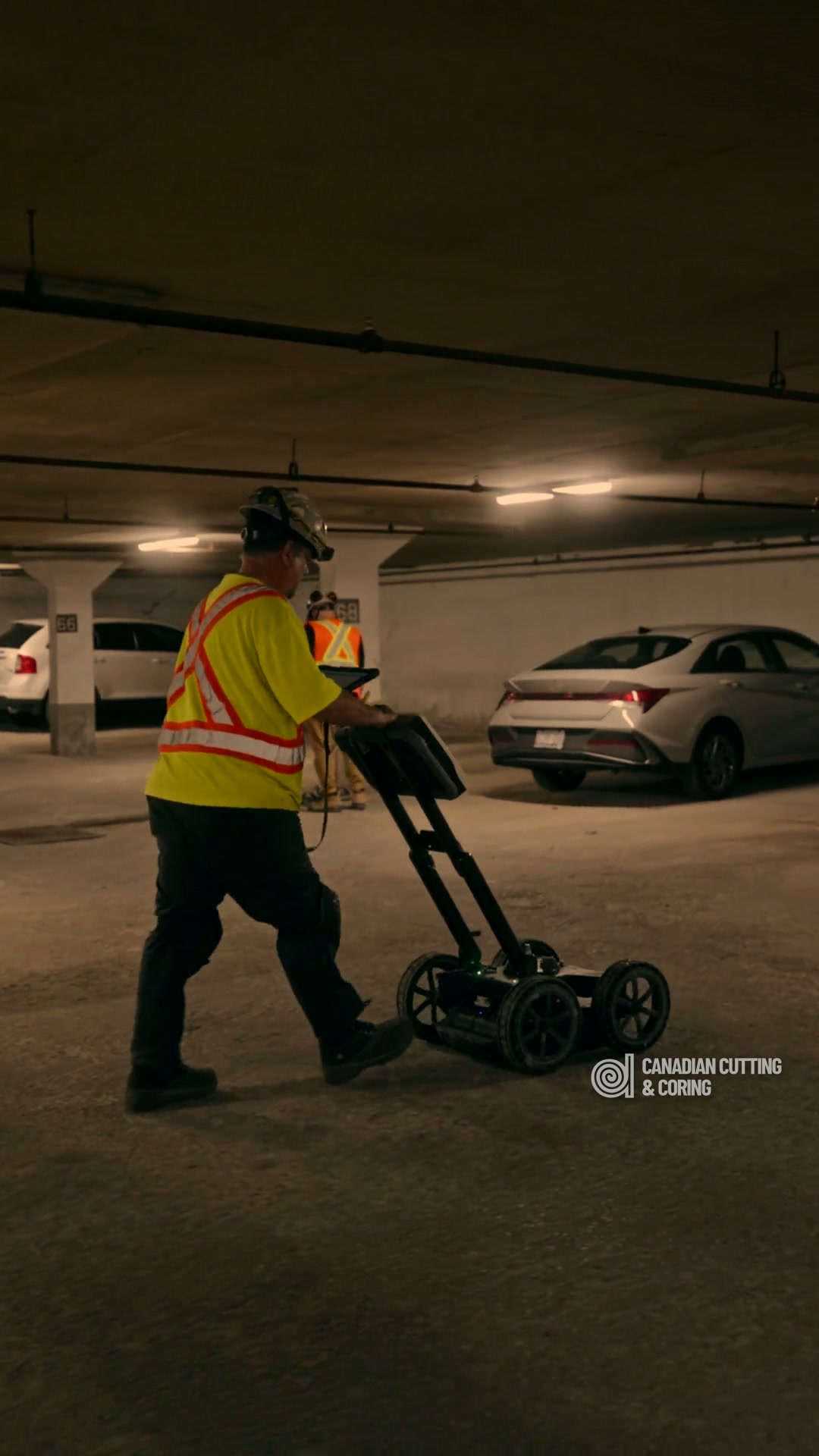
Successful concrete cutting starts long before the saw is brought to site. Depending on the project, planning may include drawing review, utility locating, GPR scanning, radiographic imaging, access planning, and removal coordination. Not every project requires every step, but identifying potential risks before cutting helps avoid delays, damage, and costly surprises.
Review
Review project drawings, site access, slab construction, removal requirements, and project constraints before cutting begins.
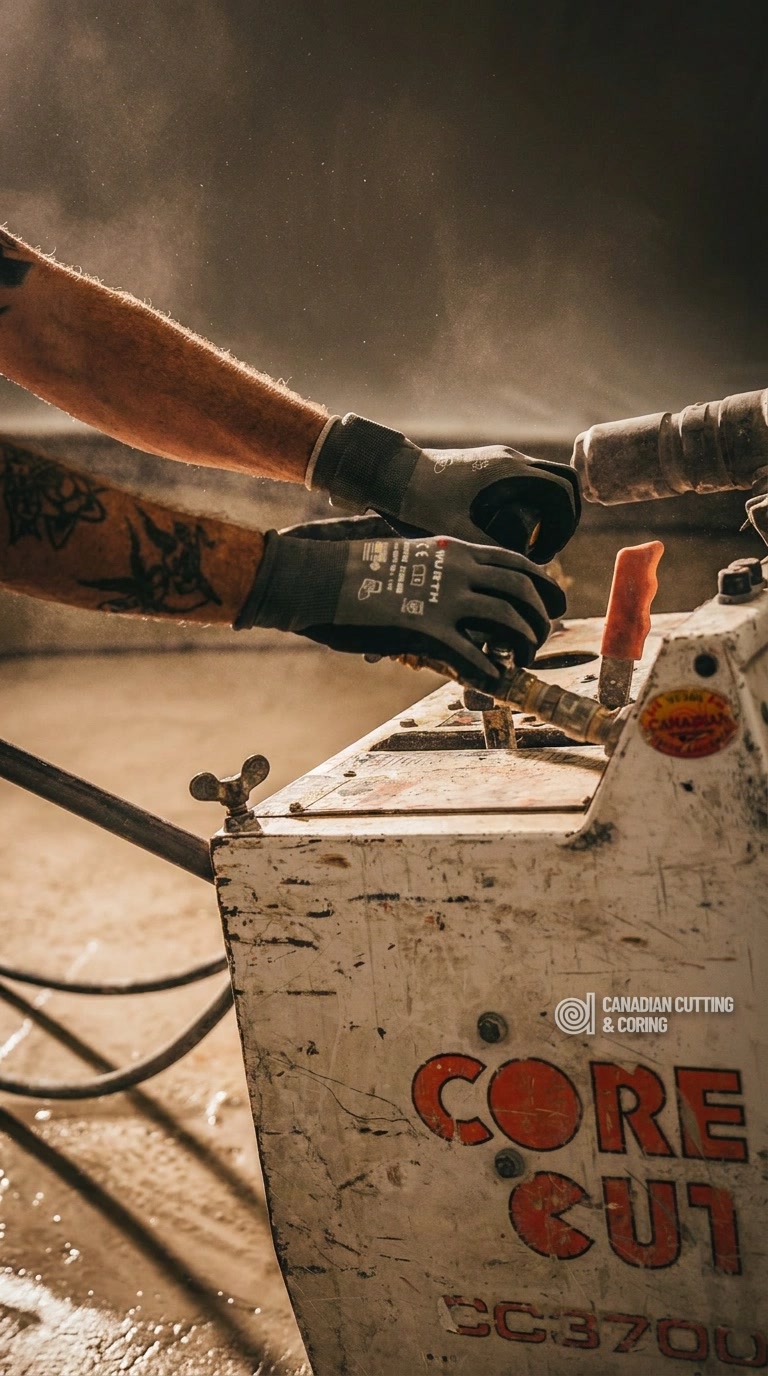
Slurry, dust, and site control
Managing Water, Slurry, and Dust
Water is used to cool the blade and control silica dust during concrete cutting, but it also creates slurry that must be properly contained and managed. On occupied construction sites and interior renovations, slurry management is an important part of the overall operation.
Depending on the project, this may include wet cutting, vacuum recovery, containment measures, floor protection, and cleanup procedures to help keep adjacent areas protected and ready for the next phase of work.
Wet Cutting
Water helps cool the blade, extend blade life, and reduce airborne silica dust during cutting operations.
Vacuum Recovery & Containment
Slurry is collected, controlled, and prevented from migrating into occupied or finished areas.
Surface Protection
Floors, finishes, equipment, and adjacent work areas are protected before cutting begins.
Cleanup & Handover
The work area is cleaned and prepared for the next trade, helping maintain project schedules and site conditions.
Questions
Slab Sawing FAQ
What is electric slab sawing?+
Electric slab sawing uses a walk-behind diamond blade saw powered by electricity to cut horizontal concrete surfaces such as floors, slabs, decks, and trenches.
When is electric slab sawing used?+
It is commonly used for interior renovations, utility trenching, floor openings, slab removals, drain installations, and structural modifications.
How deep can electric slab saws cut?+
Cutting depth depends on the saw, blade, access, slab thickness, reinforcement, and site conditions. For deeper sections, the cut can be made from both sides or stepped to reach the required depth.
Can you cut suspended slabs?+
Yes, slab sawing can be used on suspended slabs when the work is reviewed properly. Structural considerations, embedded reinforcement, post-tensioning, access below, and removal methods must be considered before cutting.
Do you scan before slab sawing?+
Scanning or imaging may be recommended when cutting could conflict with reinforcement, conduit, post-tension cables, or embedded services. The required level of investigation depends on the slab and the cut location.
Is electric slab sawing better than diesel?+
Electric is usually preferred for interior work because the saw does not produce engine exhaust and is better suited to controlled environments. Diesel saws are commonly used outdoors, on pavement, and in open-air work areas.
What happens to the cut concrete?+
Depending on the scope, concrete can be sectioned for handling, removed from the work area, or prepared for disposal. Removal requirements should be confirmed before pricing.
How is slurry controlled?+
Slurry control may include wet cutting, vacuum collection, containment, floor protection, and cleanup procedures suited to the site conditions.
Electric slab sawing across Ontario
Have a cut to plan? Let’s talk it through.
Send the drawings or describe the work and we will help confirm the method, sequence, and what to expect before pricing.
1-800-665-0705Request a Quote